Balancing Efficiency and Inherent Safety – A Case Study of Continuous Flow Technology in Pigment Red 57 Synthesis
- Share
- publisher
- miller
- Issue Time
- Sep 7,2026
Summary
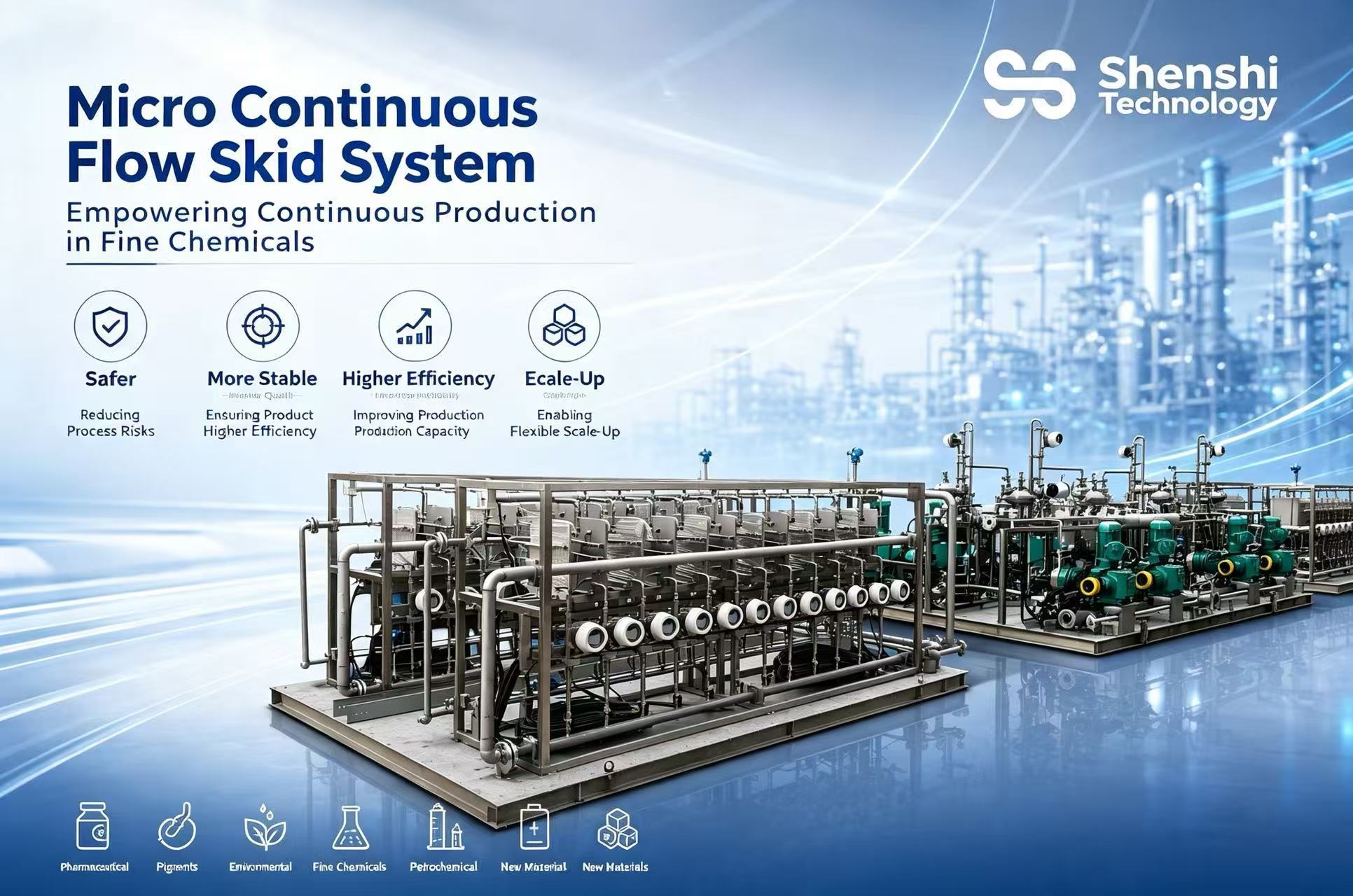
Jointly developed by Tsinghua University & Shenzhen Tsinghua Research Institute, the modular microchannel continuous flow process revolutionizes Pigment Red 57 manufacturing:
✅ Diazotization finished within ~2 minutes
✅ Liquid holdup reduced from tonne scale to millilitres/litres
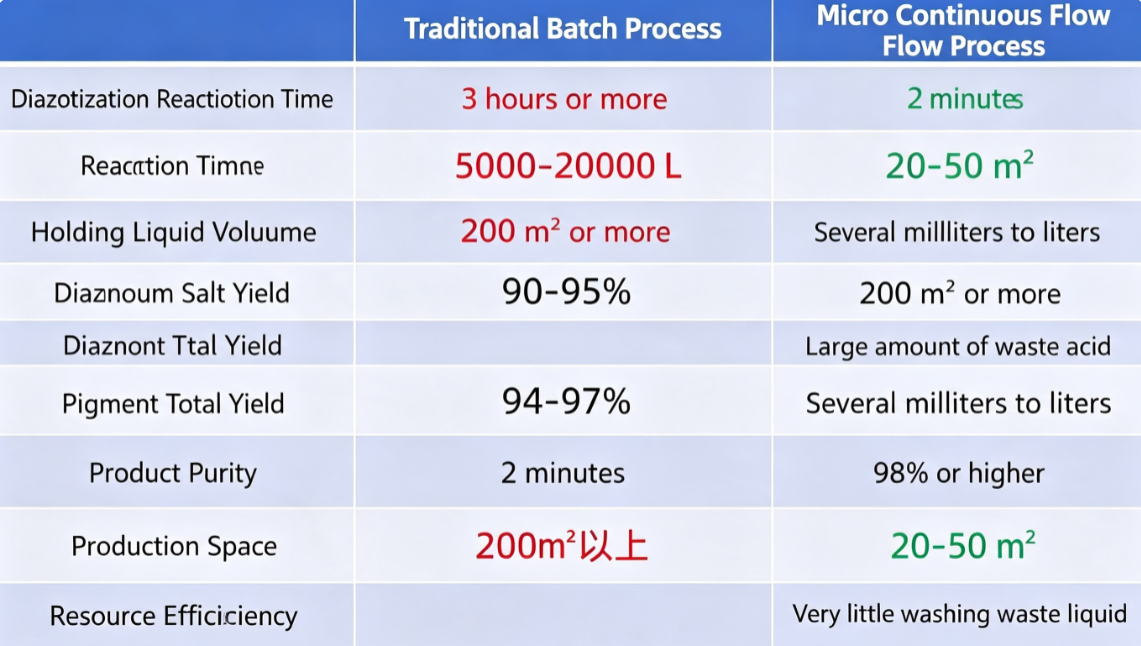
✅ Diazonium salt yield >99% | Pigment total yield >99% | Product purity ≥98%
✅ Plant footprint cut by over 75%
✅ Minimal waste liquid output, better resource efficiency
Balancing Efficiency and Inherent Safety – A Case Study of Continuous Flow Technology in Pigment Red 57 Synthesis

I. Limitations of Conventional Batch Reactor Processes
- Restricted heat and mass transfer efficiency
Diazotization requires reaction temperature maintained at 0–5°C. Conventional reactors have large volume with limited mixing and heat transfer capacity. Local hotspots easily occur, triggering diazonium salt decomposition and increased side reactions, which impair product purity and yield.
- Large on-site inventory of high-risk intermediates
Diazonium salts are thermally sensitive intermediates prone to decomposition upon heating. Batch reactors typically hold several tons to dozens of tons of reaction liquid. In case of process deviation, the massive inventory of hazardous materials leads to substantial safety risks.
- Difficult control of product consistency
Combined effects of manual feeding, temperature fluctuation and uneven mixing easily cause quality variations between batches.
II. Case Study: Continuous Flow Synthesis of Pigment Red 57
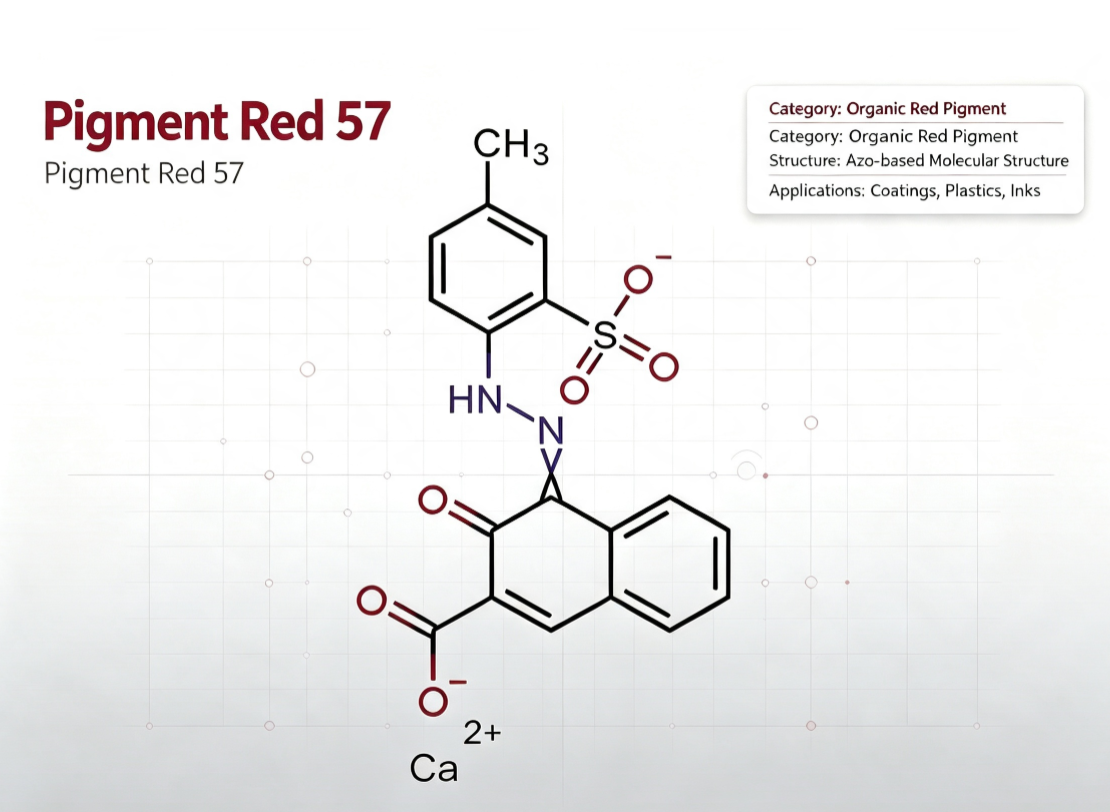
Its synthesis consists of three main stages:
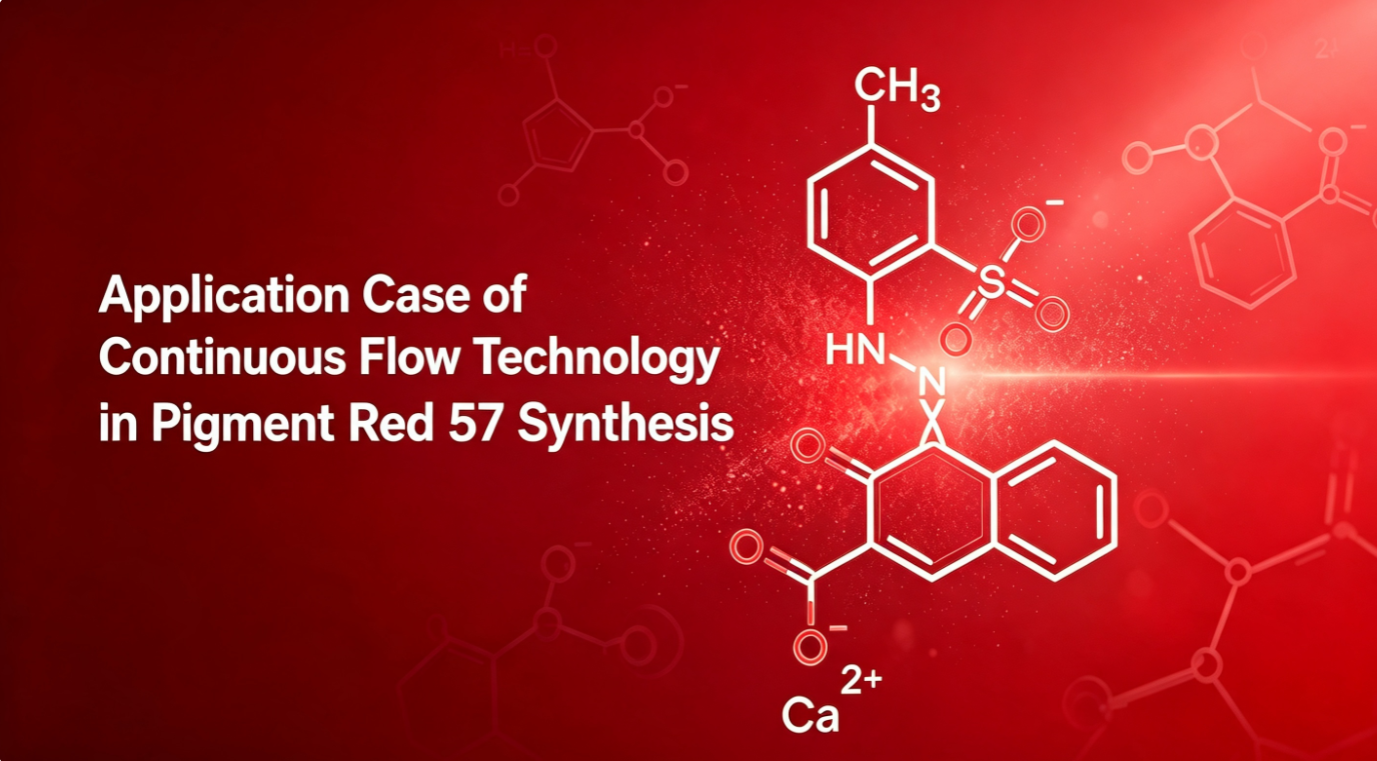
① Diazotization: 4-Aminotoluene-3-sulfonic acid reacts with sodium nitrite under acidic conditions to form diazonium salt.
C₇H₈NO₃S + NaNO₂ + HCl → [C₇H₆N₂O₃S]⁺Cl⁻ + NaCl + 2H₂O;
② Coupling: Diazonium salt undergoes coupling reaction with 2-hydroxy-3-naphthoic acid.
[C₇H₆N₂O₃S]⁺Cl⁻ + C₁₁H₈O₃ → C₁₈H₁₃N₂O₆S + HCl;
③ Laking: Metal salts such as calcium chloride are added to convert the intermediate into insoluble lake pigment.
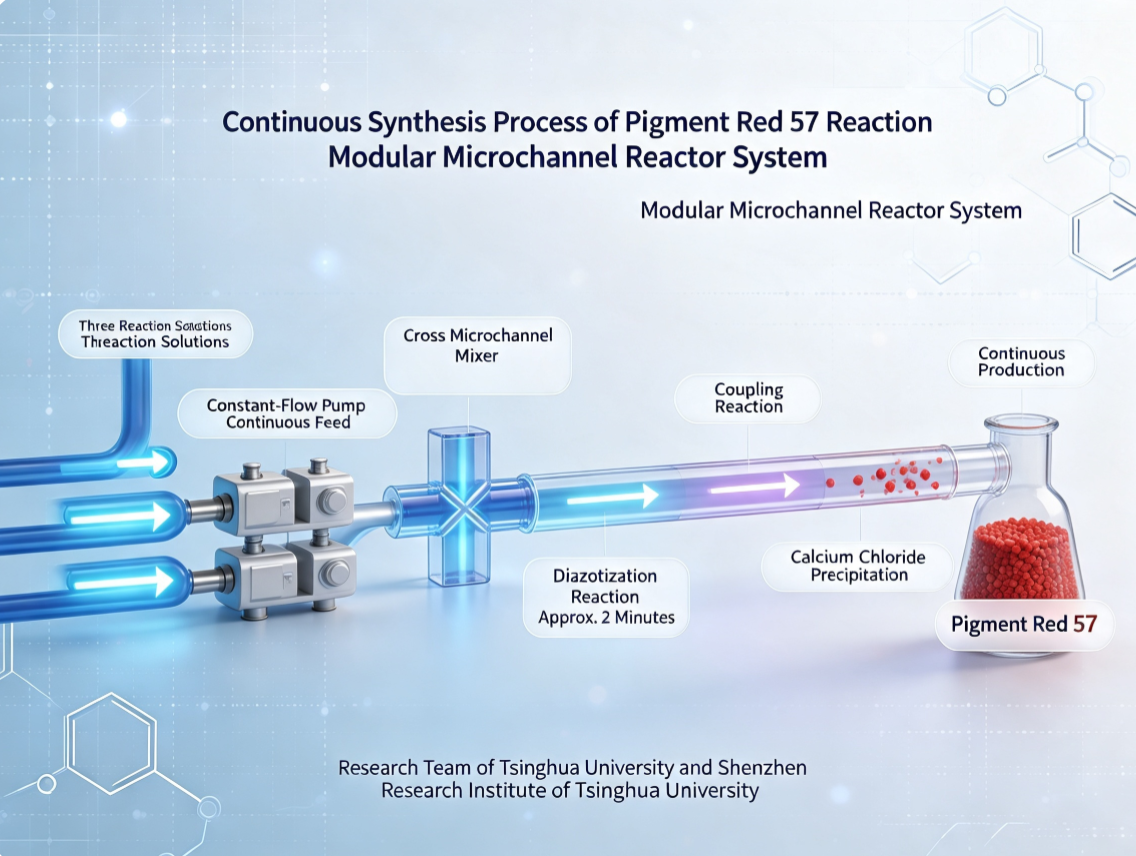
Process flow:
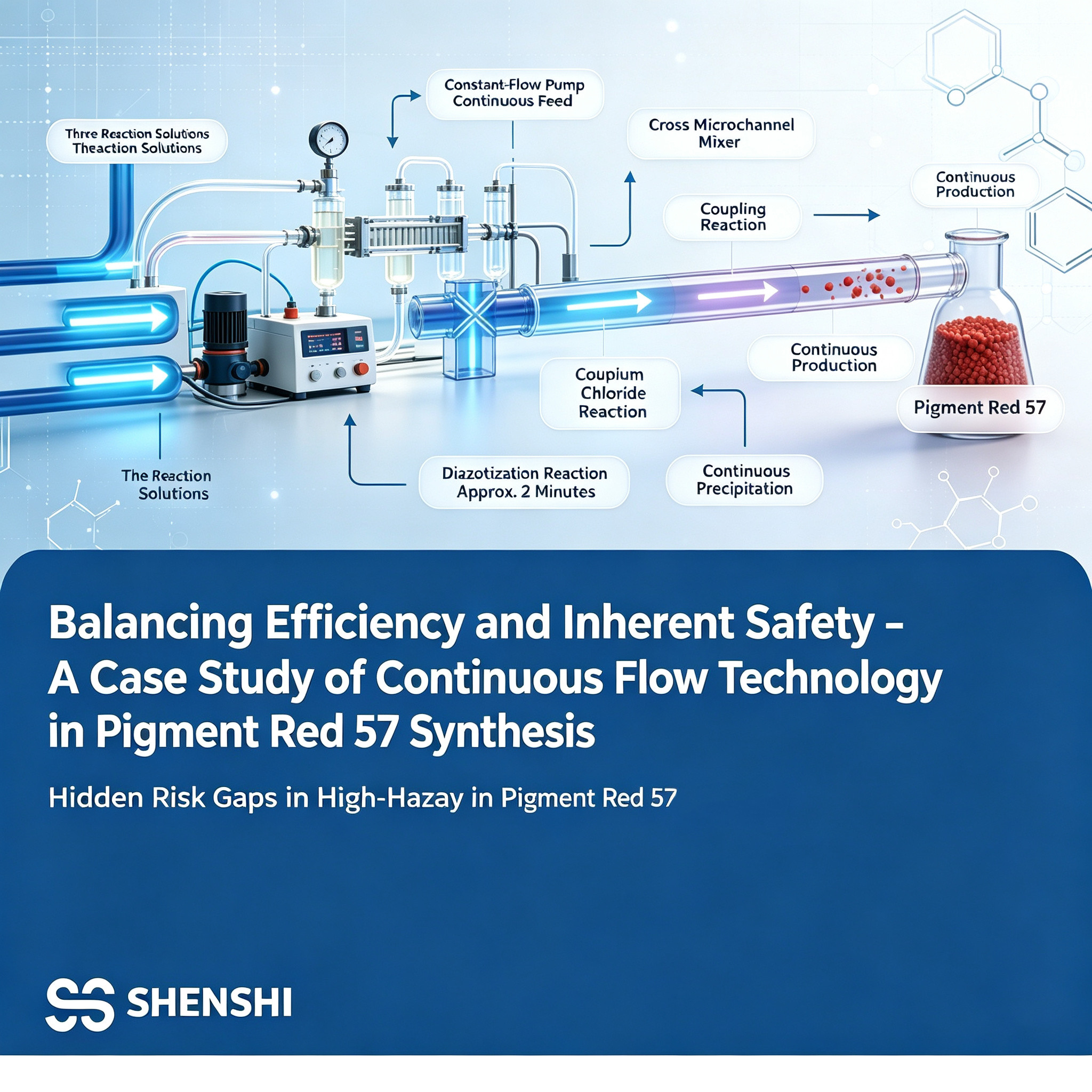
(1) Three reaction solutions are continuously delivered via metering pumps into a cross-type microchannel mixer;
(2) Rapid and homogeneous mixing takes place inside microchannels, and diazotization completes within approximately 2 minutes;
(3) The formed diazonium salt continuously flows into the next reaction unit to couple with alkaline 2-hydroxy-3-naphthoic acid solution;
(4) Calcium chloride is introduced for laking to realize continuous production.
(1) On-site liquid holdup ranges from several millilitres to several litres, compared with 5,000–20,000 L in conventional reactors, drastically reducing inventory of hazardous intermediates;
(2) Microscale channels shorten diffusion distance, boosting mass transfer efficiency by 100–1000 times and enabling instant homogeneous mixing;
(3) Extremely high specific surface area delivers superior heat transfer. Temperature can be controlled within ±1°C, providing stable reaction conditions for highly exothermic reactions.
3. Performance Comparison: Micro Continuous
Flow vs Conventional Batch Reactor