Shenshi Microfluidics launched a continuous-flow multi-functional skid-mounted solution for pilot-scale bases
- Share
- From
- shenshi
- publisher
- miller
- Issue Time
- Sep 21,2026
Summary
At CMC-CHINA Expo, Shenshi Microfluidics unveiled a modular skid-mounted continuous flow pilot platform. It supports multiple reactors, wide temperature range and full data recording, enabling flexible multi-task pilot validation for pharma and fine chemicals.
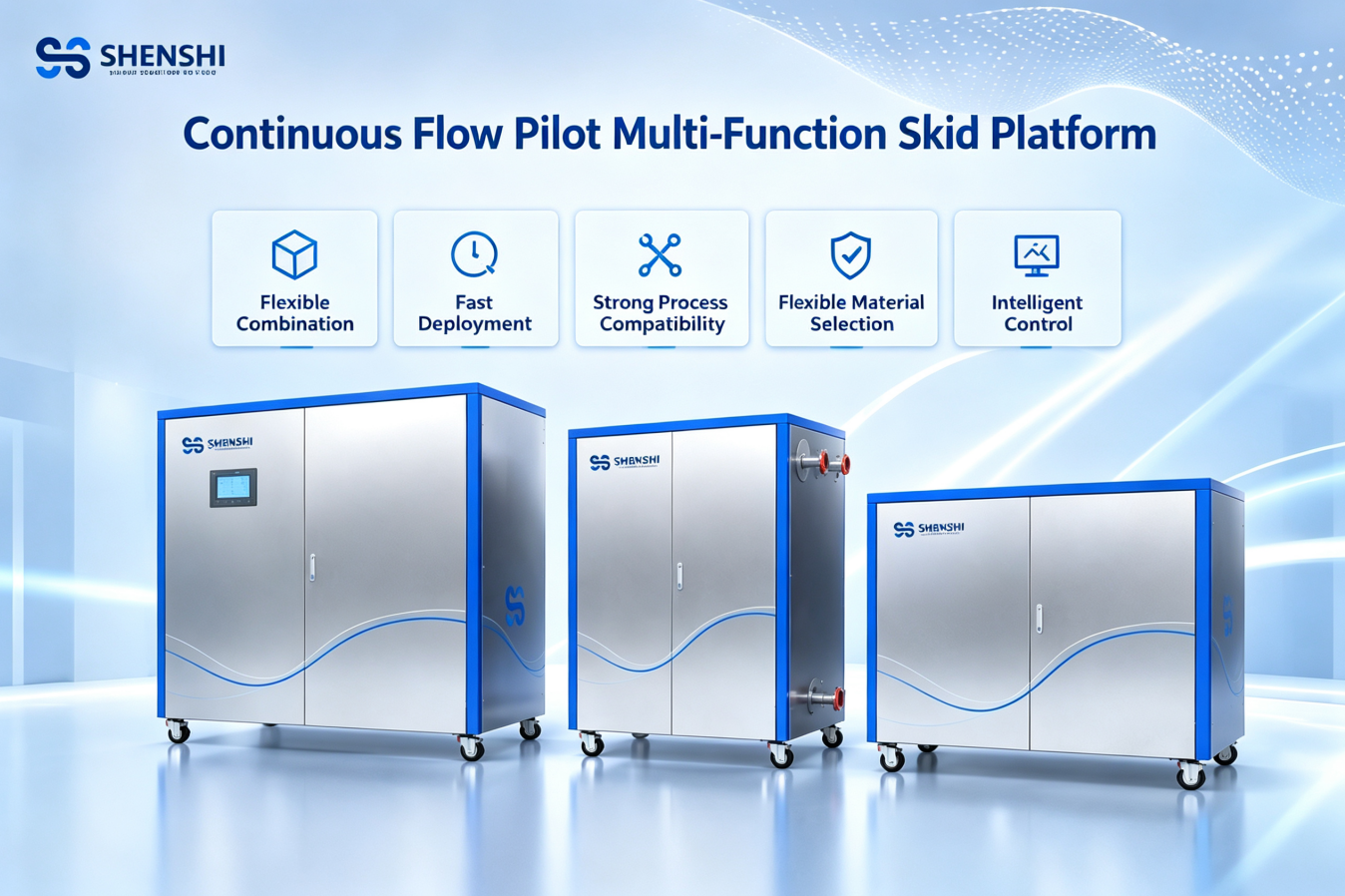
Shenshi Microfluidics launched a continuous-flow multi-functional skid-mounted solution for pilot-scale bases
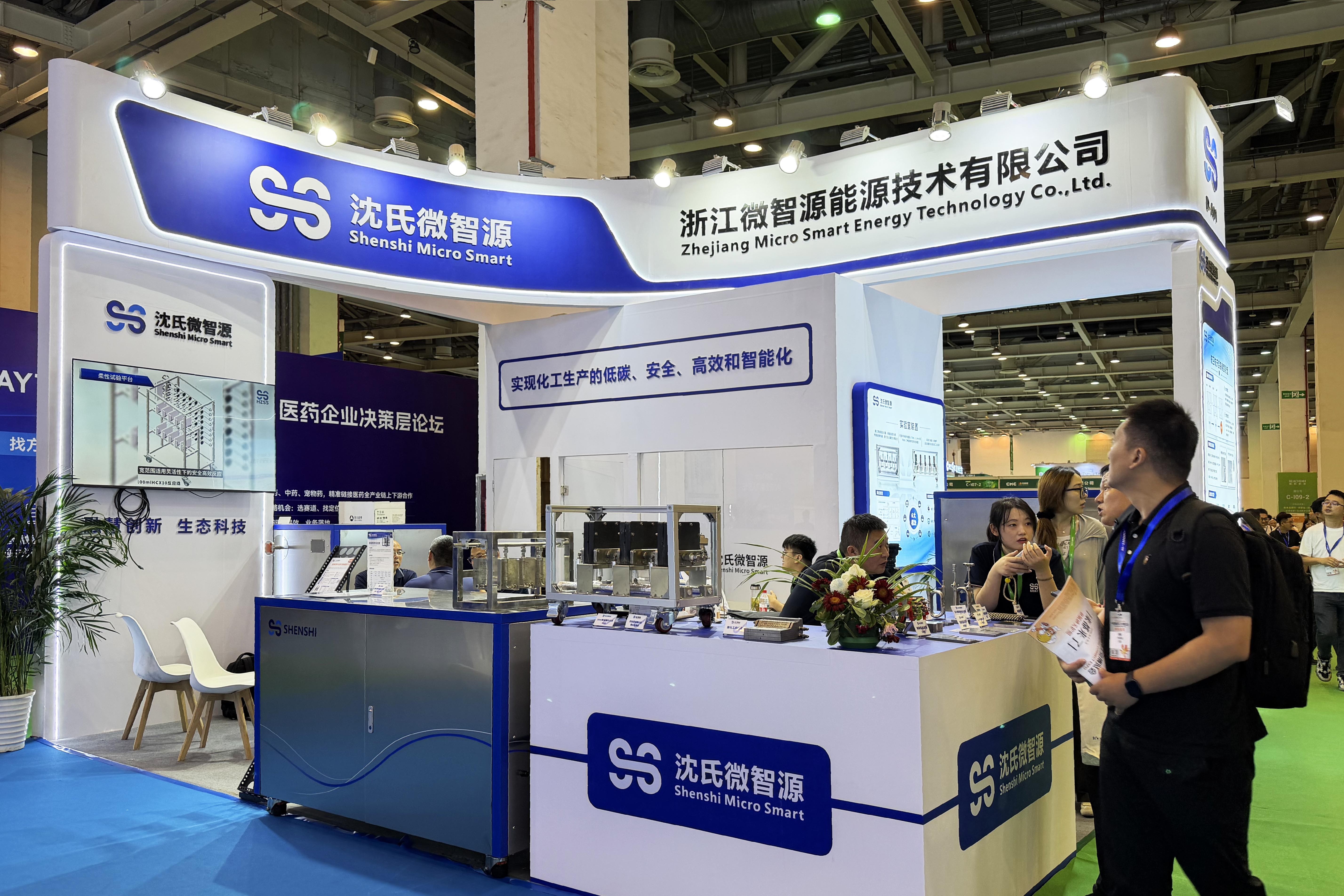
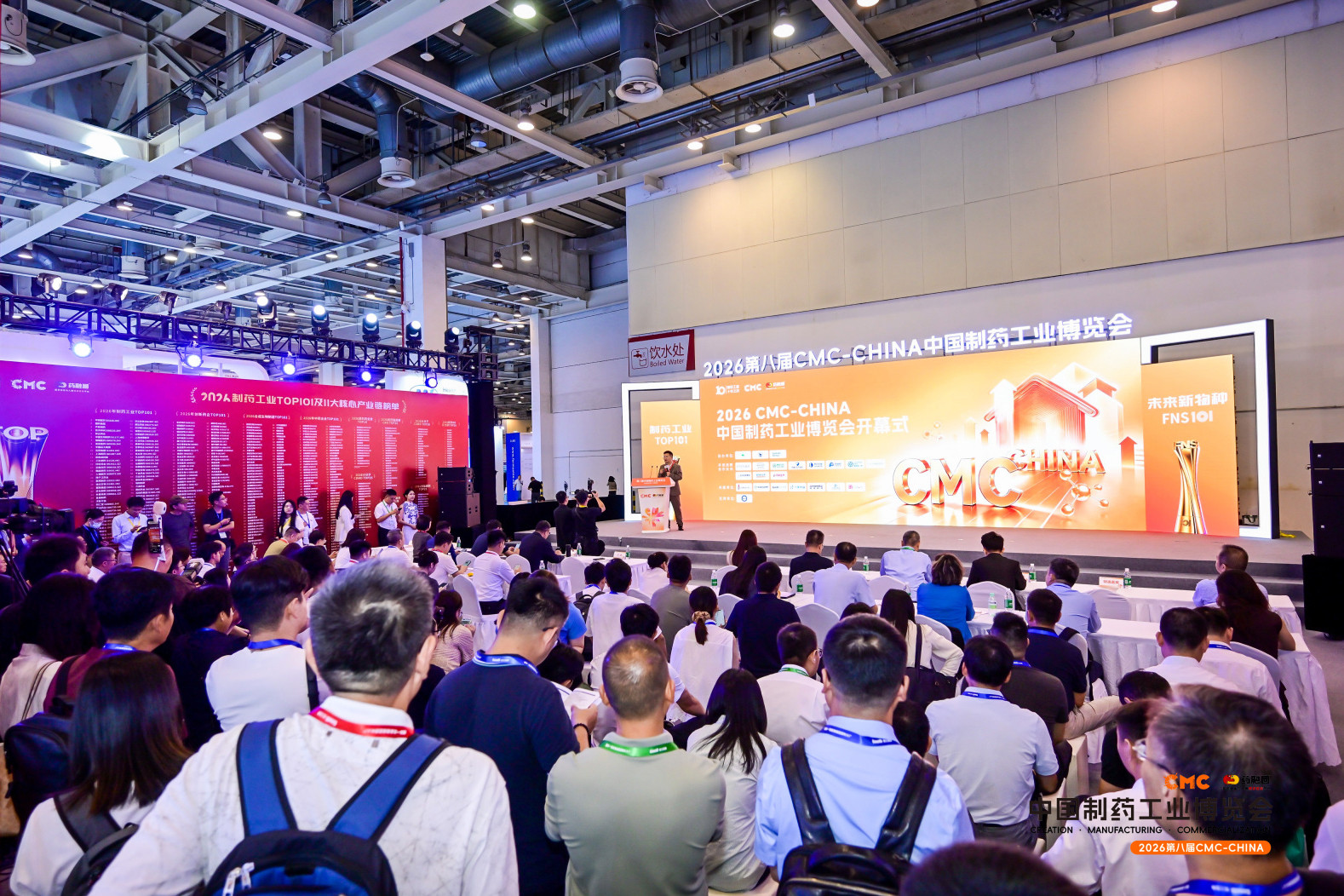
On September 5, the 8th CMC-CHINA China Pharmaceutical Industry Expo
concluded at Suzhou International Expo Center. During the exhibition, the booth
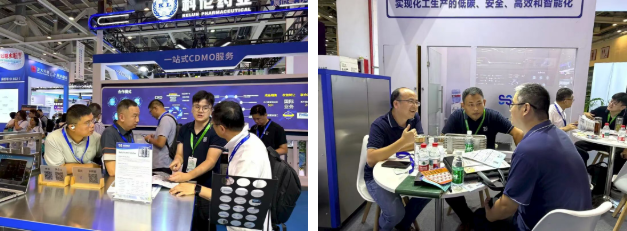
of Shenshi Microfluidics received a group of industry partners interested in
continuous-flow pilot tests, with on-site discussions focusing on equipment
reuse and process adaptation. The continuous-flow multi-functional skid-mounted
platform for pilot tests was officially unveiled at the exhibition. Through
physical displays, themed live streams and forum presentations, the
continuous-flow pilot equipment solution tailored for pilot-scale bases was
fully demonstrated.
I. Equipment
Configuration of Pilot-Scale Base: The Challenge Lies in
"Flexibility"
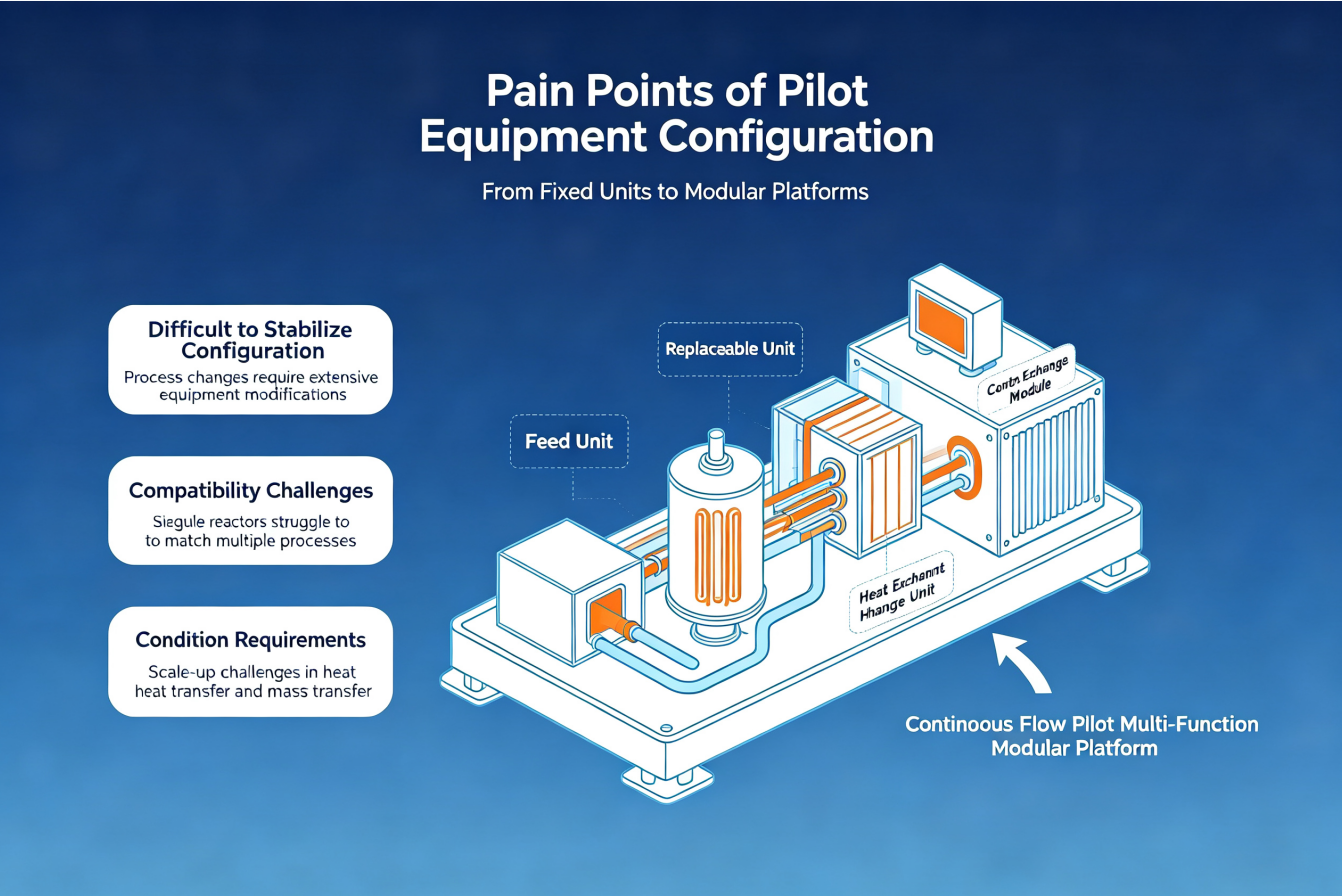
After process research and development enters the pilot stage, project types and process routes become more diverse. Equipment configuration needs to balance validation for ongoing projects and utilization for subsequent projects. Three types of challenges are prominent at this stage:
Difficulty in finalizing equipment configuration. When process conditions change, pipelines, feeding systems and heat exchange units may require reconfiguration. Fixed equipment will demand reinstallation, commissioning and even modification. Equipping a dedicated set of equipment for each separate process leads to rising capital investment and increased idle equipment simultaneously.
A single set of equipment struggles to adapt to different processes. Projects differ in reaction types, material states, as well as temperature, pressure and other operating conditions. A single reactor and fixed equipment layout cannot match varied process routes.
Process conditions require revalidation when scaling up from lab scale to pilot scale. With increased material throughput and equipment size, heat and mass transfer, material transportation, temperature control and stability of continuous operation all need re-verification. For strongly exothermic, heat-sensitive, multiphase reactions and reactions with high selectivity requirements, further validation of temperature, pressure and other parameters is mandatory.
II. One Skid-Mounted Platform, Three Targets to Meet Demands
The platform consists of feeding skids, reaction skids, heat exchange units and a control system. Each functional unit is independently configured and can be combined for use according to process requirements.
1. Modular Skid Design to Reduce Duplicate Construction
Corresponding units can be adjusted when process conditions change, eliminating the need to rebuild the entire system. When new projects are launched, functional units can be reassembled to meet process requirements, which reduces repeated installation, commissioning and modification, and lowers equipment idle rate.
The feeding unit is equipped with metering pumps, mass flow meters, safety valves and other components. It supports feeding of liquids, gases and slurries, and different wetted materials can be selected based on material characteristics. The heat exchange unit is fitted with an integrated thermostat, covering a temperature range from -40℃ to 250℃ with a control accuracy of ±0.5℃. Single or dual temperature zones are optional. The distributed integrated control system can be integrated into corresponding skids or made as an independent skid, supporting data storage, trend analysis and report generation.
2. Multiple Reactor Configurations for Process-Specific Selection
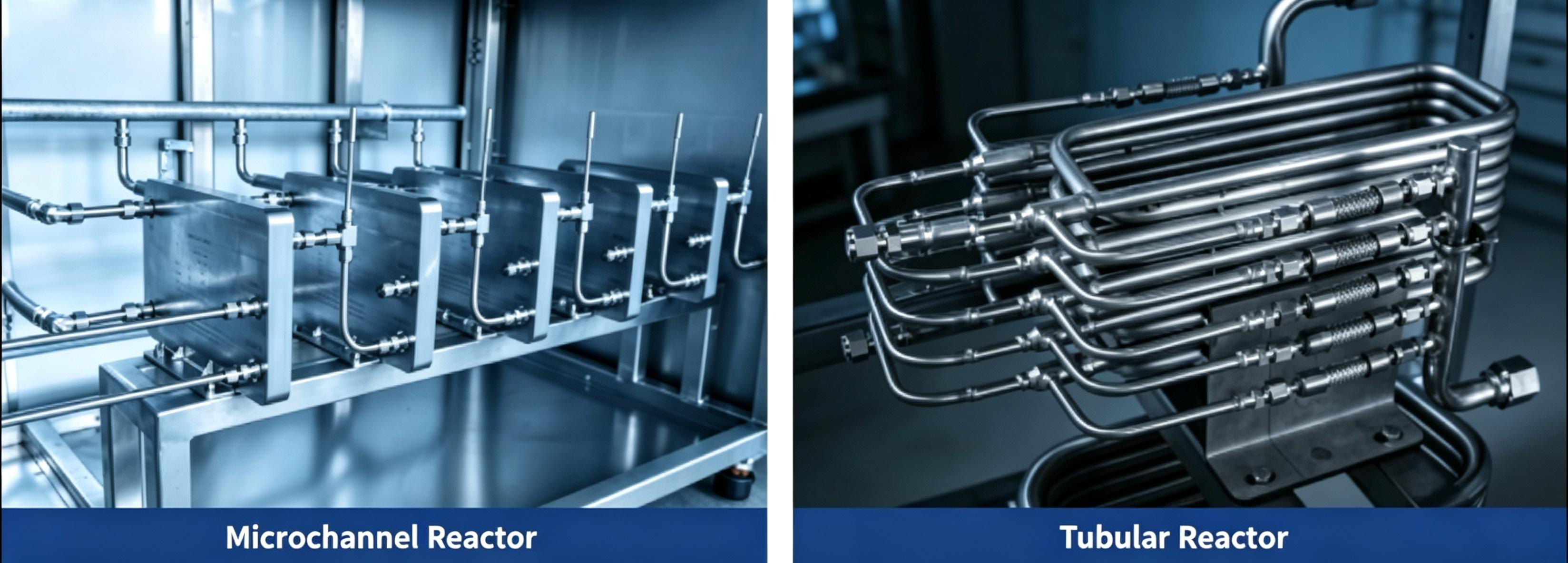
Reaction skids can be equipped with microchannel reactors, tubular reactors, dynamic tubular reactors, fixed-bed reactors and loop reactors. Different reactors match different reaction conditions and residence time requirements, and selections can be made on the same platform according to project demands.
The basic single plate of the exhibited microchannel reactor module has a holdup volume of 100 mL. Multiple modules can be connected in series or parallel, with operating temperatures ranging from -40℃ to 200℃ and operating pressure from 0 to 40 bar. It can be applied to strongly exothermic reactions such as nitration and peroxidation. Series connection extends residence time while parallel connection increases throughput.
The tubular reactor adopts a patented spiral tube structure to enhance mass and heat transfer while maintaining pressure resistance, suitable for high-temperature, high-pressure reactions and reactions requiring long residence time. Pilot-scale throughput is determined by pipe diameter, pipe length and flow velocity, and can be adjusted for scale-up requirements.
Fixed-bed reactors are used for catalyst evaluation and gas-solid, liquid-solid catalytic reactions; dynamic tubular reactors are suitable for reactions with certain viscosity, solid content or requiring enhanced mass transfer; loop reactors are applied to continuous reactions of gas-liquid and gas-liquid-solid systems.
3. Continuous Flow Control to Support Pilot Validation
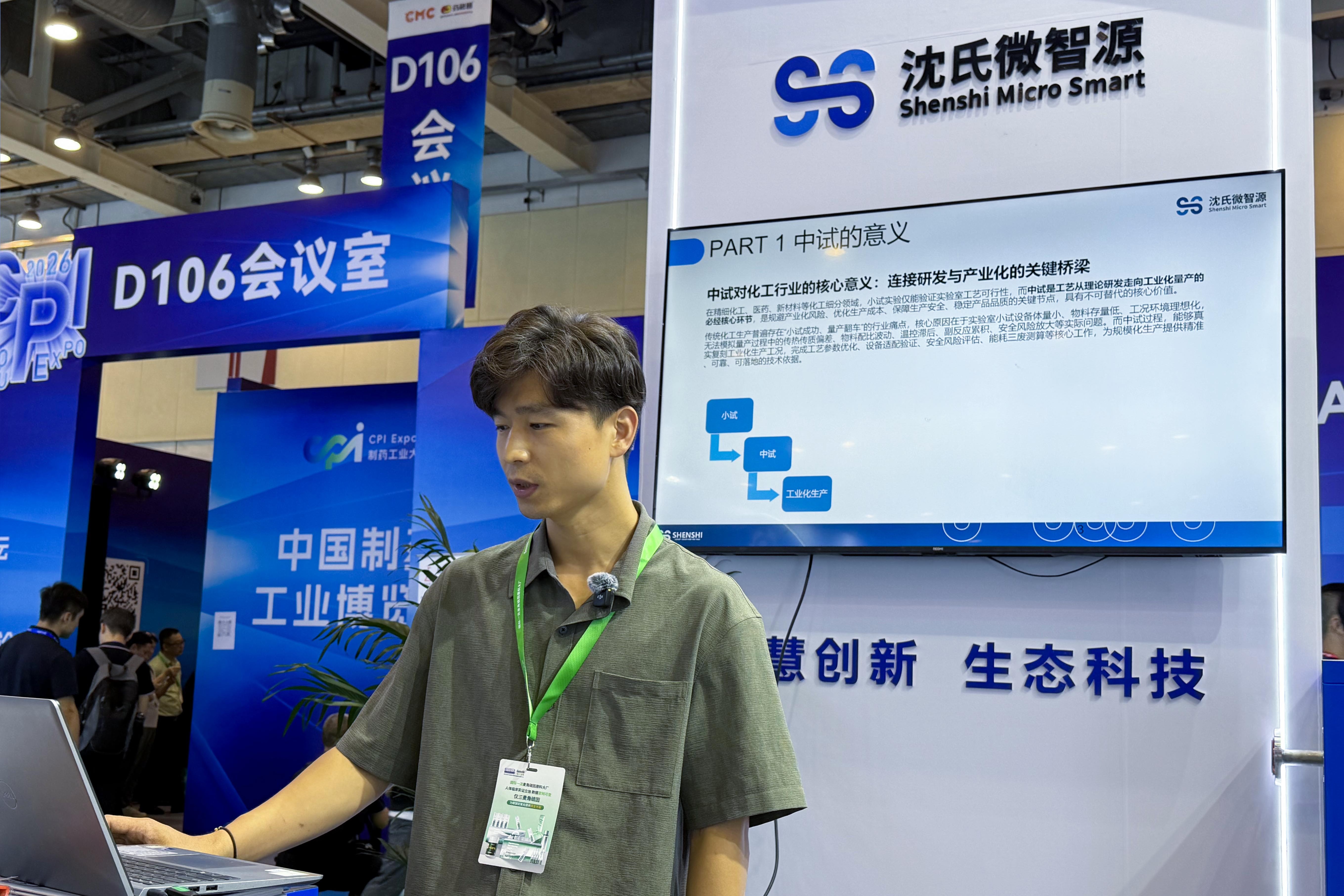
When scaling up from lab scale to pilot scale, process parameters need to be reconfirmed with pilot equipment. The continuous-flow operation mode controls and records feeding, temperature, pressure, residence time and other conditions, accumulating operational data for scale-up validation.
During the on-site live thematic broadcast, Chen Guang, R&D Director of Shenshi Weizhiyuan, shared information about the continuous-flow multi-functional skid-mounted pilot platform from three aspects: the significance of pilot testing, product introduction and cooperation cases. Combined with existing project practices of Shenshi Weizhiyuan, he illustrated the application of continuous-flow equipment in pilot validation.
One platform to undertake multiple types of pilot tasks. This is the core logic of the continuous-flow multi-functional skid-mounted pilot platform, and also the direction we intend to promote together with more pilot-scale bases.
About Shenshi
Founded in 2005, Hangzhou Shenshi Energy Conservation Technology Co., Ltd. (SHENSHI) is a high-tech enterprise specializing in energy-efficient heat transfer and microreaction technologies. As a pioneer in low-carbon thermal management, Shenshi designs and manufactures high-performance heat exchangers and micro-reactors serving industries such as energy, marine & offshore engineering, hydrogen, pharmaceuticals, and advanced manufacturing.
With solutions deployed across more than 40 countries, Shenshi is committed to delivering reliable, efficient, and sustainable thermal technologies for demanding industrial applications.